

Parents often notice a surprising change when their child begins losing baby teeth: the new adult teeth may appear noticeably yellowish.
At Pike Pediatric Dentistry in Boca Raton, Dr. Talia often helps families understand why this color difference occurs and whether it requires attention. In many cases, yellow permanent teeth in children are part of normal dental development rather than a sign of poor dental health. However, discoloration can sometimes be connected to plaque buildup, enamel changes, an injury, or another oral health concern.
Searching for professional children’s dental care in Boca Raton, FL, because your child’s new teeth look yellow? Here’s how to tell the difference between normal tooth color and real discoloration.
Is It Normal for Permanent Teeth to Look Yellow?
Yes, permanent teeth commonly appear yellower than baby teeth, especially when both are present at the same time.
Baby teeth have a brighter, milk-white appearance. Permanent teeth have a different internal structure and natural shade. During the mixed-dentition stage, this contrast can make newly erupted adult teeth look especially yellow.
The American Academy of Pediatric Dentistry notes that tooth coloration can vary significantly while children have both primary and permanent teeth.
In many children, the difference becomes much less noticeable once more permanent teeth erupt and the whiter baby teeth are gone.
Other Reasons Your Child’s Teeth May Look Yellow
Although natural tooth structure is often responsible, tooth discoloration in kids can have other causes.
1. Plaque Buildup
Newly erupting permanent teeth can be harder for children to brush thoroughly. Plaque may collect near the gumline or around partially erupted teeth.
This buildup can create a yellowish film. Improving brushing technique and having professional dental cleanings can help control it.
2. Food and Drink Stains
Certain foods and beverages can cause surface staining. Dark berries, colored drinks, soda, sauces, and strongly pigmented foods may gradually affect tooth appearance.
Regular brushing and routine cleanings help reduce these external stains.
3. Enamel Development Changes
Some children develop enamel differently as their permanent teeth form. Enamel defects may create areas that appear white, cream, yellow, orange, or brown.
Certain enamel defects can also make a tooth more sensitive or more vulnerable to breakdown and cavities.
4. Dental Injury
A tooth that has been hit or injured may gradually change color.
This deserves attention, especially when one tooth becomes noticeably darker or yellower than the surrounding teeth. Dental trauma can affect tissues inside the tooth even when there is no visible crack.
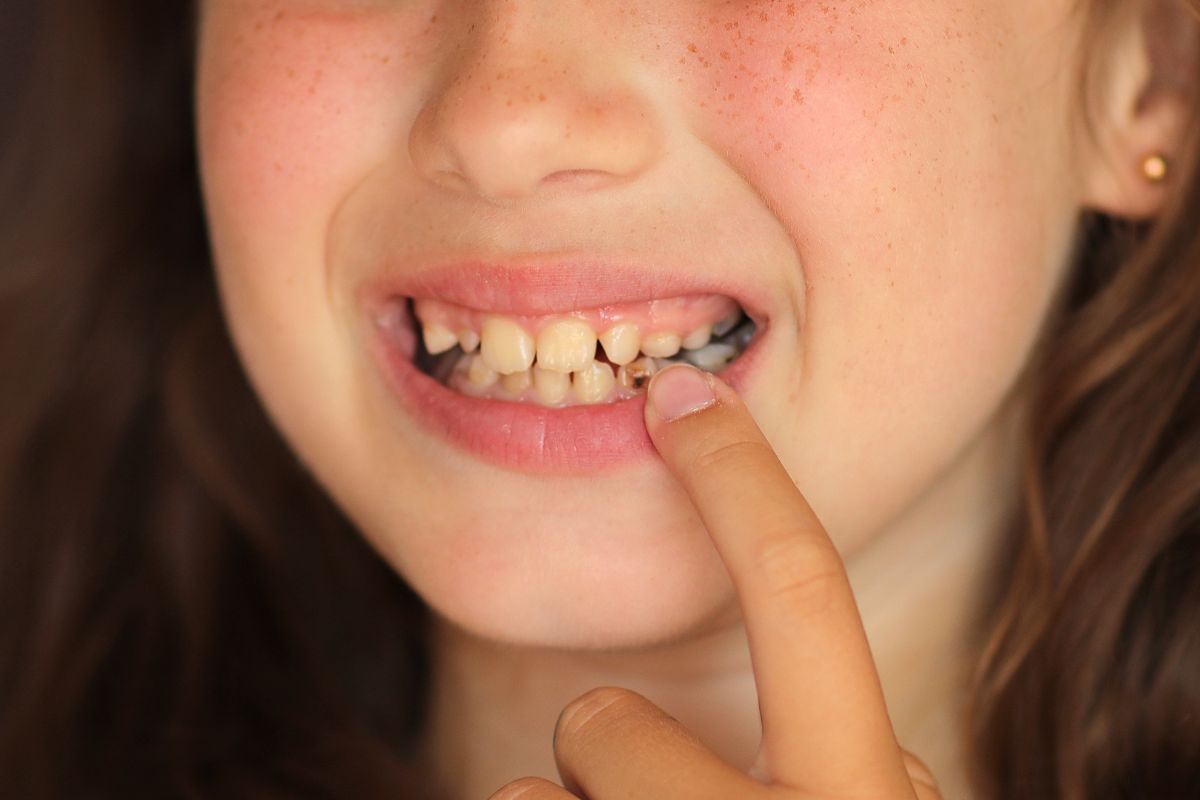
5. Tooth Decay
Discoloration accompanied by dark areas, rough surfaces, sensitivity, or discomfort may indicate tooth decay rather than natural tooth color.
Cavities should be evaluated rather than treated as a cosmetic problem.
6. Certain Medications or Developmental Factors
Some intrinsic tooth discoloration can be associated with medications taken during tooth development or with developmental conditions affecting enamel or dentin.
A dental examination can help distinguish these changes from normal variation.
How Can Parents Tell Whether Yellow Teeth Need Attention?
Look at how the color appears, not simply whether the tooth is perfectly white.
Natural permanent tooth color is usually relatively even. A dental evaluation becomes more important when you notice:
- One tooth becoming significantly darker than the others
- Yellow, brown, or white patches on the enamel
- Pain or sensitivity
- Visible plaque that does not improve with brushing
- Chips, pits, or unusual enamel texture
- Previous trauma involving the tooth
- Swelling or gum changes near the affected tooth
- Discoloration that continues to get darker
These signs do not automatically mean something is wrong, but they provide a reason for a professional assessment.
Is Teeth Whitening Safe for Children With Yellow Permanent Teeth?
Usually, parents should not immediately reach for whitening products when newly erupted permanent teeth look yellow.
Whitening strips, bleaching gels, and other cosmetic products may be unnecessary if the color is simply the tooth’s natural shade.
The AAPD discourages full-arch cosmetic bleaching during mixed dentition, when children still have both primary and permanent teeth. Whitening decisions for children and adolescents should consider the cause of discoloration and the child’s stage of dental development.
If tooth color concerns your child or affects their confidence, discuss it with a pediatric dentist before using whitening products.
What Can Parents Do to Keep Permanent Teeth Healthy?
Healthy permanent teeth do not have to look bright white. Focus first on protecting the enamel and controlling plaque.
Encourage your child to:
- Brush twice daily with fluoride toothpaste
- Brush carefully around newly erupting teeth
- Floss between teeth that touch
- Limit frequent sugary snacks and drinks
- Drink water regularly
- Attend routine dental visits and cleanings
Parents may need to supervise brushing, especially while children are still developing the coordination needed to clean every tooth effectively.
When Is It Time for Your Child to See a Pediatric Dentist?
Schedule a pediatric dental checkup if you cannot tell whether the color is natural or if your child has spots, sensitivity, pain, damaged enamel, or changes affecting only one tooth.
A pediatric dentist can examine the enamel, check for plaque or decay, review previous injuries, and determine whether the tooth is developing normally.
If your child’s tooth color has changed suddenly or you are concerned about how their permanent teeth are developing, visit our dental office for an evaluation rather than trying cosmetic treatments at home.
Help Your Child Grow Into a Healthy Permanent Smile
Seeing yellow adult teeth erupt next to bright white baby teeth can worry parents, but in many cases, the difference is completely natural. Permanent teeth have their own normal range of shades, and a slightly warmer color does not automatically indicate poor oral hygiene or unhealthy enamel.
However, yellow patches, sudden color changes, sensitivity, trauma, or other unusual symptoms should be evaluated. Identifying the reason behind discoloration allows parents to protect developing teeth and address dental concerns before they progress.
For families in the Boca Raton area who are concerned about their child’s permanent teeth, book an appointment for a pediatric dental evaluation. Call (561) 347-7006 to discuss your child’s oral health and determine whether the color you are seeing is part of normal development or requires further care.
Frequently Asked Questions
1. Why Are My Child’s New Permanent Teeth Yellower Than Their Baby Teeth?
Permanent teeth naturally have a different structure and shade than primary teeth. The underlying dentin has a yellowish color that can show through the enamel. The contrast is often more noticeable while white baby teeth are still present.
2. Does Yellow Color Mean My Child Is Not Brushing Properly?
Not necessarily. Healthy permanent teeth can naturally appear creamier or more yellow than baby teeth. However, plaque can also produce a yellow film, so persistent discoloration should be checked during a pediatric dental visit.
3. Will My Child’s Permanent Teeth Become Whiter Over Time?
The contrast often becomes less obvious after the remaining baby teeth fall out and more permanent teeth appear. Natural tooth shade varies from child to child, so permanent teeth are not expected to be perfectly white.
4. Should I Use Whitening Toothpaste On My Child’s Yellow Teeth?
Do not treat natural tooth color as a staining problem without knowing the cause. Some whitening products can be unnecessarily abrasive or inappropriate for younger children. Ask a pediatric dentist before starting any whitening approach.
5. When Is A Yellow Tooth A Reason For Concern?
Have the tooth evaluated if one tooth suddenly becomes darker, develops yellow or brown spots, feels sensitive, causes pain, or has previously been injured. These changes may need more than routine brushing.
6. Can Enamel Problems Make Permanent Teeth Appear Yellow?
Yes. Developmental enamel changes may produce yellow, cream, white, or brown areas and sometimes affect tooth sensitivity or strength. A pediatric dental examination can determine whether the enamel is healthy and whether any preventive or restorative care is appropriate.