
by Pike Pediatric Dentistry | Aug 14, 2026 | Pediatric dentistry
Parents often notice a surprising change when their child begins losing baby teeth: the new adult teeth may appear noticeably yellowish.
At Pike Pediatric Dentistry in Boca Raton, Dr. Talia often helps families understand why this color difference occurs and whether it requires attention. In many cases, yellow permanent teeth in children are part of normal dental development rather than a sign of poor dental health. However, discoloration can sometimes be connected to plaque buildup, enamel changes, an injury, or another oral health concern.
Searching for professional children’s dental care in Boca Raton, FL, because your child’s new teeth look yellow? Here’s how to tell the difference between normal tooth color and real discoloration.
Is It Normal for Permanent Teeth to Look Yellow?
Yes, permanent teeth commonly appear yellower than baby teeth, especially when both are present at the same time.
Baby teeth have a brighter, milk-white appearance. Permanent teeth have a different internal structure and natural shade. During the mixed-dentition stage, this contrast can make newly erupted adult teeth look especially yellow.
The American Academy of Pediatric Dentistry notes that tooth coloration can vary significantly while children have both primary and permanent teeth.
In many children, the difference becomes much less noticeable once more permanent teeth erupt and the whiter baby teeth are gone.
Other Reasons Your Child’s Teeth May Look Yellow
Although natural tooth structure is often responsible, tooth discoloration in kids can have other causes.
1. Plaque Buildup
Newly erupting permanent teeth can be harder for children to brush thoroughly. Plaque may collect near the gumline or around partially erupted teeth.
This buildup can create a yellowish film. Improving brushing technique and having professional dental cleanings can help control it.
2. Food and Drink Stains
Certain foods and beverages can cause surface staining. Dark berries, colored drinks, soda, sauces, and strongly pigmented foods may gradually affect tooth appearance.
Regular brushing and routine cleanings help reduce these external stains.
3. Enamel Development Changes
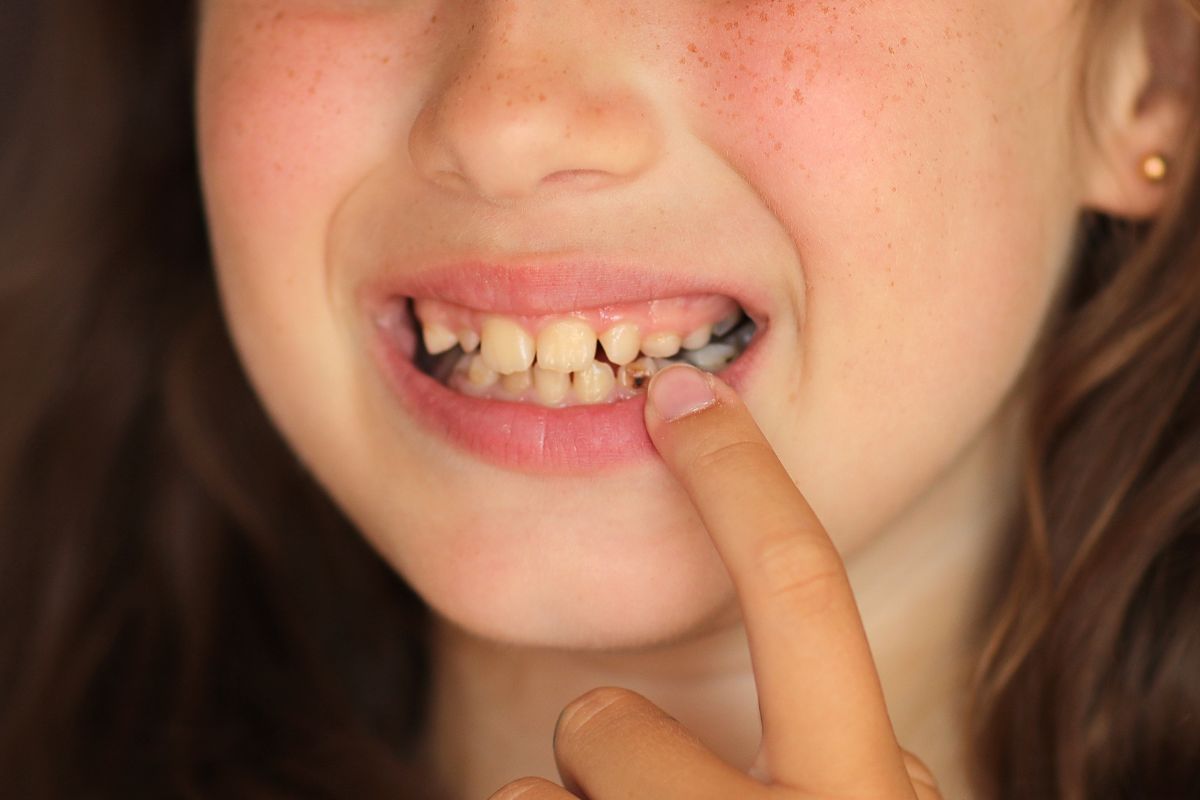
Some children develop enamel differently as their permanent teeth form. Enamel defects may create areas that appear white, cream, yellow, orange, or brown.
Certain enamel defects can also make a tooth more sensitive or more vulnerable to breakdown and cavities.
4. Dental Injury
A tooth that has been hit or injured may gradually change color.
This deserves attention, especially when one tooth becomes noticeably darker or yellower than the surrounding teeth. Dental trauma can affect tissues inside the tooth even when there is no visible crack.
5. Tooth Decay
Discoloration accompanied by dark areas, rough surfaces, sensitivity, or discomfort may indicate tooth decay rather than natural tooth color.
Cavities should be evaluated rather than treated as a cosmetic problem.
6. Certain Medications or Developmental Factors
Some intrinsic tooth discoloration can be associated with medications taken during tooth development or with developmental conditions affecting enamel or dentin.
A dental examination can help distinguish these changes from normal variation.
How Can Parents Tell Whether Yellow Teeth Need Attention?
Look at how the color appears, not simply whether the tooth is perfectly white.
Natural permanent tooth color is usually relatively even. A dental evaluation becomes more important when you notice:
- One tooth becoming significantly darker than the others
- Yellow, brown, or white patches on the enamel
- Pain or sensitivity
- Visible plaque that does not improve with brushing
- Chips, pits, or unusual enamel texture
- Previous trauma involving the tooth
- Swelling or gum changes near the affected tooth
- Discoloration that continues to get darker
These signs do not automatically mean something is wrong, but they provide a reason for a professional assessment.
Is Teeth Whitening Safe for Children With Yellow Permanent Teeth?
Usually, parents should not immediately reach for whitening products when newly erupted permanent teeth look yellow.
Whitening strips, bleaching gels, and other cosmetic products may be unnecessary if the color is simply the tooth’s natural shade.
The AAPD discourages full-arch cosmetic bleaching during mixed dentition, when children still have both primary and permanent teeth. Whitening decisions for children and adolescents should consider the cause of discoloration and the child’s stage of dental development.
If tooth color concerns your child or affects their confidence, discuss it with a pediatric dentist before using whitening products.
What Can Parents Do to Keep Permanent Teeth Healthy?
Healthy permanent teeth do not have to look bright white. Focus first on protecting the enamel and controlling plaque.
Encourage your child to:
- Brush twice daily with fluoride toothpaste
- Brush carefully around newly erupting teeth
- Floss between teeth that touch
- Limit frequent sugary snacks and drinks
- Drink water regularly
- Attend routine dental visits and cleanings
Parents may need to supervise brushing, especially while children are still developing the coordination needed to clean every tooth effectively.
When Is It Time for Your Child to See a Pediatric Dentist?
Schedule a pediatric dental checkup if you cannot tell whether the color is natural or if your child has spots, sensitivity, pain, damaged enamel, or changes affecting only one tooth.
A pediatric dentist can examine the enamel, check for plaque or decay, review previous injuries, and determine whether the tooth is developing normally.
If your child’s tooth color has changed suddenly or you are concerned about how their permanent teeth are developing, visit our dental office for an evaluation rather than trying cosmetic treatments at home.
Help Your Child Grow Into a Healthy Permanent Smile
Seeing yellow adult teeth erupt next to bright white baby teeth can worry parents, but in many cases, the difference is completely natural. Permanent teeth have their own normal range of shades, and a slightly warmer color does not automatically indicate poor oral hygiene or unhealthy enamel.
However, yellow patches, sudden color changes, sensitivity, trauma, or other unusual symptoms should be evaluated. Identifying the reason behind discoloration allows parents to protect developing teeth and address dental concerns before they progress.
For families in the Boca Raton area who are concerned about their child’s permanent teeth, book an appointment for a pediatric dental evaluation. Call (561) 347-7006 to discuss your child’s oral health and determine whether the color you are seeing is part of normal development or requires further care.
Frequently Asked Questions
1. Why Are My Child’s New Permanent Teeth Yellower Than Their Baby Teeth?
Permanent teeth naturally have a different structure and shade than primary teeth. The underlying dentin has a yellowish color that can show through the enamel. The contrast is often more noticeable while white baby teeth are still present.
2. Does Yellow Color Mean My Child Is Not Brushing Properly?
Not necessarily. Healthy permanent teeth can naturally appear creamier or more yellow than baby teeth. However, plaque can also produce a yellow film, so persistent discoloration should be checked during a pediatric dental visit.
3. Will My Child’s Permanent Teeth Become Whiter Over Time?
The contrast often becomes less obvious after the remaining baby teeth fall out and more permanent teeth appear. Natural tooth shade varies from child to child, so permanent teeth are not expected to be perfectly white.
4. Should I Use Whitening Toothpaste On My Child’s Yellow Teeth?
Do not treat natural tooth color as a staining problem without knowing the cause. Some whitening products can be unnecessarily abrasive or inappropriate for younger children. Ask a pediatric dentist before starting any whitening approach.
5. When Is A Yellow Tooth A Reason For Concern?
Have the tooth evaluated if one tooth suddenly becomes darker, develops yellow or brown spots, feels sensitive, causes pain, or has previously been injured. These changes may need more than routine brushing.
6. Can Enamel Problems Make Permanent Teeth Appear Yellow?
Yes. Developmental enamel changes may produce yellow, cream, white, or brown areas and sometimes affect tooth sensitivity or strength. A pediatric dental examination can determine whether the enamel is healthy and whether any preventive or restorative care is appropriate.

by Pike Pediatric Dentistry | Aug 7, 2026 | Pediatric dentistry
Hearing the harsh sound of your child scraping their teeth together while sleeping can make any parent pause. Nighttime tooth grinding, clinically known as pediatric bruxism, is surprisingly common among young children. Many parents worry that this habit might lead to permanent damage or severe oral health issues. Fortunately, understanding why this happens can help you determine the right time to take action.
At our welcoming practice, Dr. Talia works closely with families in Boca Raton and across South Florida to evaluate these nocturnal habits and keep young smiles healthy as they grow.
If you live in Palm Beach County and need a trusted Boca Raton pediatric dental team to check your child’s teeth, addressing early signs of wear can prevent future discomfort.
Understanding Nighttime Teeth Grinding in Children
Pediatric bruxism often occurs during deep sleep cycles. Children may unconsciously clench their jaws or slide their upper and lower teeth against each other. Parents usually notice the sound first, which can sound remarkably loud for such a small child.
While it can be disturbing to hear, occasional grinding in toddlers and young children is frequently a temporary phase. As jawbones expand and primary teeth are replaced by adult teeth, the bite undergoes rapid structural changes. Most children naturally outgrow the habit without long-term harm. However, frequent or aggressive grinding requires closer evaluation to protect developing enamel and jaw joints.
Common Causes of Nighttime Teeth Grinding
Tooth grinding rarely stems from a single trigger. Children often grind their teeth due to a mix of physical and environmental factors:
- Bite Misalignment: Teething infants and young children often clench their jaws to self-soothe when new teeth emerge or when primary teeth do not align comfortably.
- Stress and Anxiety: Emotional changes, such as starting a new school year, moving to a new house, or changes in routine, can manifest as subconscious tension during sleep.
- Airway Obstructions and Breathing Issues: Children with enlarged tonsils, swollen adenoids, or seasonal allergies may grind their teeth to instinctively open their airway during sleep.
- Earaches and Physical Discomfort: Ear pain or sinus pressure can prompt children to shift their jaw repeatedly to relieve pressure in the head and neck.
Identifying the root cause helps determine whether your child simply needs time or targeted clinical intervention.
Warning Signs Parents Should Watch For
While mild grinding often resolves naturally, specific symptoms signal that it is time for a professional evaluation:
- Visible Tooth Wear: Flattened, chipped, or noticeably shortened enamel surfaces.
- Morning Discomfort: Complaints of a sore jaw, facial tenderness, or dull headaches upon waking.
- Pain While Chewing: Sensitivity to hot, cold, or sweet foods due to worn protective enamel.
- Disrupted Sleep Patterns: Restless sleeping, loud snoring, or frequent nighttime awakenings.
If you observe any of these warning signs, proactive care can protect your child’s smile from further damage.
Effective Solutions and Preventive Care
Treatment depends on the underlying cause and the severity of enamel wear. For mild cases without physical symptoms, simple observation and relaxing bedtime routines, such as warm baths, light reading, or reducing screen time, may help calm the nervous system before sleep.
When physical wear or morning jaw soreness occurs, custom dental appliances offer the safest protection:
- Custom Appliance Therapy: Specially designed pediatric oral guards create a soft, protective barrier between the upper and lower arches.
- Preventing Enamel Erosion: Wearing tooth guards during sleep absorbs grinding pressure and prevents further enamel damage.
- Relieving Jaw Pressure: Professionally fitted mouthguards help relax overactive jaw muscles throughout the night.
- Comfortable Custom Fit: Unlike over-the-counter options, dental-grade oral guards are precisely according to your child’s unique mouth structure, so they remain secure and comfortable.
If airway or allergy issues are contributing factors, partnering with your pediatrician alongside regular dental visits ensures comprehensive care.
Protect Your Child’s Smile with Pike Pediatric Dentistry
Nighttime grinding is a common part of childhood development, but persistent bruxism shouldn’t be ignored. Leaving severe bruxism unaddressed can lead to premature tooth wear, jaw muscle fatigue, and unnecessary dental discomfort. Early monitoring ensures your child’s growing smile stays strong, painless, and healthy.
Please visit our dental office so our team can examine your child’s bite, check for enamel wear, and determine if protective solutions are needed. At our practice, Dr. Talia and our compassionate team specialize in compassionate, child-centered care designed to put both parents and young patients at ease.
Ready to protect your child’s teeth and ensure a restful night’s sleep for your family in the Boca Raton area? Call us today at 1-561-347-7006 to book a pediatric evaluation appointment.
Frequently Asked Questions
Will Teeth Grinding Damage My Child’s Permanent Teeth?
Persistent grinding can wear down enamel, leading to tooth sensitivity, chips, or alignment issues. While many children outgrow the habit before adult teeth emerge, severe grinding can affect permanent teeth if left unmonitored. A professional checkup ensures enamel remains protected.
How Do Protective Guards Help Children Who Grind Their Teeth?
Custom night mouthguards provide a comfortable physical cushion between the upper and lower teeth. They absorb heavy bite pressure, reduce jaw muscle tension, and shield enamel from friction. Protective oral guards prevent long-term wear while allowing your child to sleep comfortably.
Can Stress Cause Young Children To Grind Their Teeth At Night?
Emotional stress, anxiety, or big routine changes frequently trigger nighttime clenching in children. The body releases tension subconsciously during deep sleep phases through jaw movement. Creating a calm, screen-free bedtime routine can help lower stress before sleep.
How Can I Tell If My Child Needs A Professional Dental Evaluation For Bruxism?
You should seek an evaluation if your child complains of morning jaw soreness, facial pain, or tooth sensitivity. Visible signs like chipped, flattened, or unusually short teeth also require immediate attention. A checkup can pinpoint the cause and prevent further damage.
At What Age Do Children Usually Stop Grinding Their Teeth?
Most children naturally stop grinding between ages six and ten, once their primary teeth transition and their adult molars come in. If grinding persists beyond this age range or causes physical discomfort, an evaluation helps protect developing teeth.
by Pike Pediatric Dentistry | Jul 22, 2026 | Pediatric dentistry
For families in Boca Raton, FL, establishing healthy oral care habits early is one of the best ways to protect a child’s smile. Choosing the right toothpaste may seem like a small decision, but it plays an important role in preventing cavities and supporting healthy teeth from infancy through childhood. If you’ve been wondering how much toothpaste your child should use or whether fluoride is necessary for baby teeth, you’re not alone.
At Pike Pediatric Dentistry, we help parents understand the simple steps that can make a lasting difference in their child’s oral health. Children under three years old should use a rice grain-sized amount of fluoride toothpaste, while children between three and six years old should use a pea-sized amount. Using fluoride toothpaste from the first tooth helps strengthen enamel and reduce the risk of tooth decay.
Although the toothpaste aisle is filled with colorful packaging and countless choices, understanding what truly matters makes selecting the right toothpaste much easier. Knowing which ingredients to look for, how much toothpaste to use at each stage of development, and how to establish healthy brushing habits can help set your child up for a lifetime of healthy smiles.
Why Fluoride Is Important from the First Tooth
Many parents ask whether fluoride is necessary for baby teeth since they eventually fall out. The answer is yes.
Baby teeth play a much bigger role than many people realize. They help children chew comfortably, speak clearly, maintain proper spacing for permanent teeth, and support healthy jaw development. If cavities develop in baby teeth, they can lead to pain, infection, difficulty eating, and may even affect the developing adult teeth beneath the gums.
Dental professionals recommend using fluoride toothpaste as soon as the first tooth appears. Fluoride strengthens enamel by helping replace minerals lost during daily acid attacks caused by bacteria and sugary foods. Stronger enamel is more resistant to decay, making fluoride one of the most effective tools for preventing childhood cavities.
Starting early also helps establish healthy brushing habits that children are more likely to continue as they grow.
How Much Toothpaste Should Your Child Use?
Using the correct amount of toothpaste is just as important as choosing the right type. Too little may not provide enough cavity protection, while using excessive amounts increases the likelihood that young children will swallow more fluoride than recommended.
Birth to 3 Years
Once the first tooth erupts, use only a tiny smear of fluoride toothpaste—about the size of a grain of rice.
This small amount provides excellent protection while minimizing fluoride ingestion, especially since infants and toddlers are still learning to spit.
Ages 3 to 6
As children grow older, increase the amount to a pea-sized dab of fluoride toothpaste.
Although preschoolers develop better brushing skills, they still require close supervision. Encourage them to spit out excess toothpaste after brushing rather than swallowing it.
Age 6 and Older
School-age children should continue using a pea-sized amount while practicing proper brushing techniques. Parents should continue supervising until children consistently brush every tooth thoroughly and rinse appropriately.
Choosing the Right Toothpaste
With so many children’s toothpaste options available, it’s helpful to know which features truly matter.
Choose Fluoride Toothpaste
Fluoride should appear as the active ingredient. Most children’s fluoride toothpastes contain approximately 1,000 ppm (parts per million) of fluoride, an amount recommended for cavity prevention.
Look for the ADA Seal of Acceptance
The American Dental Association (ADA) Seal indicates that the toothpaste has been evaluated for safety and effectiveness. Choosing products with this seal provides confidence that they meet established dental standards.
Select a Child-Friendly Flavor
Some children enjoy fruity or bubble gum flavors, while others prefer mild mint.
The goal is finding a toothpaste your child is comfortable using every day without encouraging them to swallow it because it tastes like candy.
Consider Sensitive Mouths
If your child develops irritation, canker sores, or sensitivity, speak with your dentist about alternative formulations that may contain fewer irritating ingredients.
Teaching Proper Brushing Techniques
Even the best toothpaste cannot fully protect teeth if brushing isn’t done correctly.
For infants and toddlers, parents should perform all brushing.
Using a soft-bristled toothbrush, gently clean every surface of each tooth using small circular motions. Remember to brush:
- Front surfaces
- Back surfaces
- Chewing surfaces
- Along the gumline
Brush twice every day—once in the morning and once before bedtime—for approximately two minutes.
As children get older, encourage them to participate. Allow them to brush first, then finish the job yourself. Most children do not develop the hand coordination needed for effective brushing until around seven or eight years old.
Using songs, timers, or colorful toothbrushes can help make brushing more enjoyable and encourage consistency.
Common Toothpaste Mistakes Parents Should Avoid
Even with the best intentions, some common habits can reduce the effectiveness of your child’s oral care routine.
Using Too Much Toothpaste
Television commercials often show toothbrushes completely covered with toothpaste, but children need much less.
Remember:
- Rice grain-sized amount for children under three.
- Pea-sized amount for children ages three to six.
Avoiding Fluoride Because of Myths
Some parents worry about fluoride after reading conflicting information online.
When used according to age recommendations, fluoride toothpaste is both safe and highly effective for preventing cavities.
Letting Children Brush Without Supervision
Young children often miss many tooth surfaces or brush too quickly.
Parents should supervise brushing daily until children consistently demonstrate proper technique.
Rinsing Too Much After Brushing
After brushing, children should spit out the excess toothpaste without repeatedly rinsing with large amounts of water.
Leaving a small amount of fluoride on the teeth allows continued protection even after brushing is finished.
When Should You Start Brushing?
Oral care begins before teeth even appear.
Parents can gently wipe an infant’s gums using a clean, damp cloth after feedings. This helps remove bacteria and familiarizes babies with oral care routines.
Once the first tooth erupts—usually around six months—begin brushing with a soft infant toothbrush and the recommended rice grain-sized amount of fluoride toothpaste.
Consistency matters more than perfection. Brushing every day builds routines that become second nature as children grow.
Making Brushing Easier for Young Children
It’s perfectly normal for toddlers to resist brushing from time to time. Rather than turning brushing into a struggle, focus on making the experience enjoyable.
Helpful strategies include:
- Letting your child choose their toothbrush.
- Playing a favorite two-minute song.
- Using a brushing timer or mobile app.
- Reading books about visiting the dentist.
- Brushing together so your child can copy your example.
- Offering praise for cooperation rather than perfection.
Creating positive experiences early helps children view oral hygiene as a normal part of daily life rather than something to fear.
Why Regular Dental Visits Matter
Home care provides the foundation for healthy teeth, but regular dental visits remain an important part of preventive care.
Pediatric dental professionals monitor your child’s oral development, identify concerns early, provide preventive treatments when appropriate, and answer questions about brushing, nutrition, thumb sucking, teething, and fluoride.
Early dental visits also help children become comfortable in the dental office, making future appointments much less stressful.
Give Your Child the Best Start for a Lifetime of Healthy Smiles
Healthy brushing habits begin at home, but regular dental visits are equally important for protecting your child’s growing smile. Choosing the right toothpaste, using the correct amount, and scheduling preventive dental checkups can help reduce the risk of cavities while supporting healthy oral development.
If you have questions about your child’s brushing routine or it’s time for their next dental visit, call us today at (561) 347-7006 to schedule an appointment. Our friendly team is here to provide compassionate pediatric dental care and help your child enjoy a lifetime of healthy, confident smiles.
Frequently Asked Questions
What if my child swallows toothpaste?
Young children often swallow small amounts while learning to brush. This is why using only the recommended rice grain-sized or pea-sized amount is important. Continue encouraging your child to spit as they develop.
Does my child need fluoride toothpaste if our drinking water contains fluoride?
Yes. Fluoridated water and fluoride toothpaste work together to provide the best protection against cavities when used appropriately.
Are natural or organic toothpastes safe for children?
Some natural toothpastes are effective, but many do not contain fluoride. If you choose a natural toothpaste, check that it contains fluoride and preferably carries the ADA Seal of Acceptance.
When can my child brush independently?
Most children need parental supervision until approximately seven or eight years old because proper brushing requires coordination and attention to detail.

by Pike Pediatric Dentistry | Jul 15, 2026 | Pediatric dentistry
Helping your child maintain a healthy smile starts with building good habits early. For families looking for childrens dental in Boca Raton FL services, understanding the importance of preventive dental care can make a lasting difference in a child’s oral health. Healthy teeth support proper speech development, comfortable chewing, self-confidence, and overall well-being. By teaching children good oral hygiene practices from a young age, parents can help reduce the risk of cavities and other dental problems while encouraging lifelong healthy habits.
At Pike Pediatric Dentistry, we believe every child deserves a positive dental experience. Through preventive care, education, and regular dental visits, parents can help their children develop healthy smiles that last well into adulthood.
Why Children’s Dental Health Is So Important
Many people think baby teeth are only temporary, so they are not as important as permanent teeth. In reality, primary teeth play a critical role in your child’s development.
Baby teeth help children:
- Chew food properly for healthy nutrition.
- Learn to speak clearly.
- Maintain space for permanent teeth.
- Guide adult teeth into their proper positions.
- Support normal jaw development.
If a baby tooth is lost too early because of decay or injury, nearby teeth may begin shifting into the empty space. This can affect how permanent teeth erupt and may contribute to future orthodontic concerns.
Children’s oral health also affects their daily lives. Tooth pain can interfere with eating, sleeping, concentrating at school, and participating in normal activities. Preventive dental care helps reduce these risks and keeps children smiling confidently.
What Causes Cavities in Children?
Cavities remain one of the most common chronic childhood conditions, but they are largely preventable.
Every mouth naturally contains bacteria. These bacteria feed on sugars and carbohydrates from foods and drinks. As they digest these sugars, they produce acids that gradually weaken tooth enamel. Over time, repeated acid attacks can create cavities.
Many parents believe candy is the only culprit, but cavity-causing sugars are found in many everyday foods, including:
- Juice and sports drinks
- Soft drinks
- Cookies and candy
- Crackers
- Bread
- Breakfast cereal
- Dried fruit
- Sweetened yogurt
Even healthy foods contain natural sugars. The key is not eliminating every sugary food but managing how often children consume them.
Frequent snacking exposes teeth to acid attacks throughout the day. Giving the mouth time between meals allows saliva to neutralize acids and naturally protect the teeth.
Healthy Habits That Help Prevent Cavities
Preventing cavities starts with simple daily routines.
Parents can help protect their child’s smile by encouraging these healthy habits:
- Brush twice every day using fluoride toothpaste.
- Floss once daily after teeth begin touching.
- Drink water instead of sugary beverages whenever possible.
- Limit frequent snacking between meals.
- Schedule regular dental checkups.
- Replace toothbrushes every three to four months or sooner if the bristles become worn.
Consistency is more important than perfection. Small habits practiced every day provide long-term benefits for children’s oral health.

The Importance of Preventive Dental Care
Preventive dentistry focuses on stopping dental problems before they become serious. Regular dental visits allow the dentist to identify concerns early, monitor oral development, and recommend treatments that help protect growing smiles.
Dental Sealants
The chewing surfaces of permanent molars contain deep grooves where food particles and bacteria easily collect. These areas are often difficult for children to clean thoroughly with a toothbrush.
Dental sealants provide a protective coating that covers these grooves and helps reduce the risk of cavities.
Applying sealants is simple and comfortable:
- The tooth is cleaned thoroughly.
- The surface is prepared.
- The sealant material is placed.
- A special curing light hardens the material.
No drilling or injections are needed. Once applied, sealants can protect teeth for several years while being checked during routine dental visits.
Professional Fluoride Treatments
Fluoride helps strengthen tooth enamel and makes teeth more resistant to decay.
Although fluoride is found in many toothpastes and community water supplies, professional fluoride treatments provide additional protection for children who may have a higher risk of cavities.
The treatment is quick, painless, and often completed during a routine dental appointment.
Building Good Oral Hygiene Habits at Every Age
Children’s dental needs change as they grow. Establishing age-appropriate routines helps create lifelong healthy habits.
Infants
Even before the first tooth appears, gently clean your baby’s gums using a soft, damp cloth after feedings.
When the first tooth erupts, begin brushing with a soft infant toothbrush and a small smear of fluoride toothpaste about the size of a grain of rice.
Toddlers and Preschoolers
As more teeth appear, continue brushing twice daily.
Children between ages three and six should use a pea-sized amount of fluoride toothpaste.
Although toddlers enjoy brushing independently, parents should continue helping to ensure every tooth is cleaned properly.
Making brushing fun through songs, timers, or reward charts can encourage better cooperation.
School-Age Children
As children become more independent, parents should continue supervising brushing and flossing.
Permanent molars usually erupt around age six, making preventive treatments such as dental sealants an important consideration.
Children should also begin flossing daily once neighboring teeth begin touching.
Teenagers
Teenagers often face additional oral health challenges due to orthodontic treatment, sports activities, busy schedules, and dietary choices.
Encouraging regular brushing, flossing, healthy eating, and routine dental visits helps protect their smiles during these important years.
Regardless of age, children should brush for two minutes twice a day and floss once every day to maintain healthy teeth and gums.
by Pike Pediatric Dentistry | Jul 8, 2026 | Pediatric dentistry
Many parents feel frustrated when their child continues to develop cavities despite brushing twice a day, eating relatively healthy foods, and visiting the dentist regularly. It may seem like you’re doing everything right, yet new cavities keep appearing.
At Pike Pediatric Dentistry, we understand that preventing cavities isn’t always as simple as brushing and flossing. Families searching for childrens dental Boca Raton FL often discover that several factors—including genetics, enamel strength, diet, oral bacteria, and daily habits—can influence a child’s risk for tooth decay. Understanding these factors is the first step toward protecting your child’s long-term oral health.
Why Do Some Children Get More Cavities?
Every child has a unique smile, and so does their risk for cavities.
While good oral hygiene is essential, it isn’t the only factor that determines whether a child develops tooth decay. Some children naturally have a higher risk because of their tooth structure, saliva composition, eating habits, or the bacteria present in their mouths.
Instead of blaming yourself, it’s helpful to understand the factors that contribute to cavities so you can work with your pediatric dentist to create a personalized prevention plan.
1. Some Children Naturally Have Weaker Enamel
One of the biggest reasons Kids Keep Getting Cavities is that their enamel may be more vulnerable.
Enamel is the hard outer layer that protects each tooth. In some children, it may develop differently or be naturally less resistant to acid attacks from plaque bacteria.
When enamel is weaker, cavities can form more easily—even when brushing habits are good.
2. Frequent Snacking Throughout the Day
It’s not just what children eat—it’s how often they eat.
Every time your child consumes sugary or starchy foods, bacteria produce acids that attack tooth enamel.
Frequent snacking means the teeth are exposed to these acid attacks more often, leaving less time for the enamel to recover.
Common snacks that increase cavity risk include:
- Crackers
- Fruit snacks
- Sticky candies
- Chips
- Sweetened drinks
- Juice boxes
Choosing healthier snacks and limiting constant grazing can significantly reduce cavity risk.

3. Hidden Sugar in Everyday Foods
Parents are often surprised to learn that many foods marketed toward children contain added sugars.
Examples include:
- Flavored yogurt
- Granola bars
- Sports drinks
- Breakfast cereals
- Applesauce pouches
Reading nutrition labels and choosing lower-sugar alternatives can make a noticeable difference over time.
4. Brushing Isn’t Always Effective
A child may brush every morning and night but still miss important areas.
Young children often need parental assistance because they may:
- Brush too quickly
- Miss their back teeth
- Skip the gumline
- Use too little toothpaste
Supervising brushing until children develop good technique helps remove plaque more effectively.
5. Dry Mouth Can Increase Cavity Risk
Saliva helps wash away food particles and neutralize acids.
If a child breathes through their mouth, takes certain medications, or doesn’t drink enough water, reduced saliva can make cavities more likely.
Keeping children well hydrated and discussing persistent dry mouth with a pediatric dentist can help identify underlying causes.
Can Kids Who Brush Every Day Still Get Cavities?
Yes. Brushing twice a day is one of the best ways to protect your child’s teeth, but it’s only one part of cavity prevention.
Children may still develop cavities because of:
- Deep grooves in their teeth
- Frequent snacking
- Acid-producing bacteria
- Poor flossing habits
- Genetics
- Inadequate fluoride exposure
That’s why routine dental checkups and preventive treatments remain important, even for children with good brushing habits.
How Parents Can Help Reduce Cavity Risk
While no method can guarantee a cavity-free childhood, a few healthy habits can significantly lower the risk.
Brush and Floss Every Day
Children should brush for two minutes twice daily using fluoride toothpaste.
Parents should continue supervising brushing and flossing until their child has the coordination to clean thoroughly on their own.
Limit Sugary Snacks and Drinks
Instead of frequent sugary snacks, encourage healthier choices such as:
- Cheese
- Fresh fruits
- Vegetables
- Yogurt without added sugar
- Water instead of sugary beverages
Reducing the number of sugary snacks throughout the day is often more important than eliminating them completely.
Schedule Regular Dental Visits
Routine dental exams allow your pediatric dentist to detect early signs of tooth decay before they become larger problems.
Professional cleanings also remove plaque and tartar that brushing alone can’t eliminate.
Ask About Fluoride and Dental Sealants
Preventive treatments can provide additional protection for children who are more likely to develop cavities.
Fluoride strengthens enamel, while dental sealants create a protective barrier over the chewing surfaces of back teeth where decay commonly begins.
Quick Answer
Why do some kids keep getting cavities no matter what parents do?
Kids Keep Getting Cavities for many reasons beyond brushing habits. Genetics, weaker enamel, frequent snacking, hidden sugars, cavity-causing bacteria, dry mouth, and inconsistent flossing all increase the risk of tooth decay. Regular preventive dental care helps identify these risk factors early and supports healthier teeth as children grow.
Myth vs. Fact
Myth: Cavities only happen because children eat too much candy.
Fact: While sugar contributes to tooth decay, cavity risk is also influenced by oral bacteria, enamel strength, saliva production, and daily oral hygiene habits.
Myth: Baby teeth aren’t important because they’ll eventually fall out.
Fact: Healthy baby teeth help children chew comfortably, speak clearly, and guide permanent teeth into their proper positions.
Myth: If my child brushes twice a day, they won’t get cavities.
Fact: Brushing is essential, but factors like diet, genetics, fluoride exposure, and regular dental visits also play important roles in preventing cavities.
Help Your Child Build Healthy Dental Habits for Life
Even children with excellent brushing habits can develop cavities. Understanding your child’s individual risk factors allows problems to be identified early and treated before they become more serious.
Schedule Your Child’s Dental Visit
Every child has unique oral health needs, and early preventive care can make a lasting difference. If you have concerns about frequent cavities or would like a personalized prevention plan, we’re here to help.
Call (561) 347-7006 to schedule your child’s appointment today.
Frequently Asked Questions
1. Why does my child keep getting cavities even though they brush every day?
Brushing alone may not remove all plaque. Factors such as diet, enamel strength, bacteria, flossing habits, and genetics can also contribute to tooth decay.
2. Can genetics make children more likely to get cavities?
Yes. Genetics may affect enamel quality, saliva composition, and tooth shape, all of which can influence cavity risk.
3. Are dental sealants worth it for children?
Yes. Dental sealants protect the deep grooves of molars, where cavities commonly develop, and are an effective preventive treatment for many children.
4. How often should my child visit the dentist?
Most children should have a dental checkup and cleaning every six months, although your pediatric dentist may recommend a different schedule based on your child’s needs.
5. What’s the best way to prevent cavities in children?
The best approach combines daily brushing and flossing, a balanced diet, fluoride, regular dental visits, and preventive treatments such as sealants when appropriate.

by Pike Pediatric Dentistry | Jun 26, 2026 | Pediatric dentistry
As a parent, hearing that your child may need a tooth extraction can feel overwhelming. It’s natural to worry about their comfort and whether removing a tooth is truly necessary. The good news is that pediatric dentists always aim to preserve natural teeth whenever possible. However, there are situations where removing a baby tooth or a damaged permanent tooth is the healthiest choice to protect your child’s oral development.
Understanding the signs your child may need a tooth extraction can help you recognize when it’s time to seek professional care. Early evaluation often prevents infections from worsening and supports healthy growth of the teeth and jaws.
Whether your child has persistent tooth pain, swelling, or a dental injury, knowing what to watch for can help you make informed decisions about their oral health.
Quick Answer
What are the signs your child may need a tooth extraction?
Some of the most common signs your child may need a tooth extraction include severe tooth decay, persistent tooth pain, dental infections, swelling around the gums, traumatic dental injuries, baby teeth that don’t fall out naturally, and overcrowding that interferes with proper tooth development. A pediatric dental examination can determine whether an extraction is necessary or if another treatment can save the tooth.
Why Would a Child Need a Tooth Extraction?
Most children never need a tooth extracted unexpectedly. In many cases, problems can be treated with fillings, crowns, or other restorative procedures. However, when a tooth is badly damaged or poses a risk to surrounding teeth and gums, removing it may be the safest option.
A pediatric dentist carefully evaluates several factors before recommending an extraction, including:
- The amount of damage to the tooth
- Whether an infection is present
- The stage of your child’s dental development
- The health of nearby teeth and gums
- Future orthodontic considerations
The goal is always to protect your child’s long-term oral health while minimizing discomfort.
Severe Tooth Decay That Cannot Be Repaired
One of the most common reasons for a pediatric tooth extraction is extensive tooth decay.
When a cavity progresses too far, there may not be enough healthy tooth structure remaining to support a filling or crown. If bacteria reach the inner pulp of the tooth and the damage cannot be repaired successfully, removing the tooth may help prevent the infection from spreading.
Routine dental visits play an important role in identifying cavities before they become severe enough to require extraction.
Persistent Tooth Pain That Doesn’t Go Away
Children don’t always describe dental pain clearly. Instead of saying their tooth hurts, they may avoid eating, chew on only one side of their mouth, or become unusually irritable.
Persistent tooth pain should never be ignored because it may indicate:
- Deep cavities
- Dental infection
- Nerve inflammation
- Hidden tooth fractures
- Damage beneath the gumline
If discomfort continues for more than a day or two, a dental examination is the safest next step.
Swollen Gums or Facial Swelling
Swelling around a tooth is often a sign that an infection is developing.
Parents may notice:
- Puffy or red gums
- Swelling near the jaw
- Tenderness while eating
- A small bump on the gums
- Fever accompanied by tooth pain
These symptoms require prompt attention because untreated infections can spread to surrounding tissues. In some cases, removing the affected tooth is the best way to eliminate the source of infection and protect your child’s overall health.
Dental Injuries After Falls or Sports Accidents
Active children are no strangers to bumps and falls. While many dental injuries are minor, some accidents can severely damage a tooth.
A pediatric dentist may recommend extraction if:
- The tooth is fractured below the gumline.
- The tooth cannot be restored safely.
- The injury affects the surrounding bone.
- The tooth has become unstable after trauma.
Even if the injury seems minor, it’s important to schedule a dental evaluation as soon as possible. Prompt treatment often improves the chances of preserving the tooth whenever possible.
Baby Teeth That Don’t Fall Out Naturally
Baby teeth usually loosen and fall out on their own as permanent teeth begin to emerge.
Occasionally, however, a baby tooth remains in place longer than expected and blocks the permanent tooth from erupting properly.
This may lead to:
- Crowded teeth
- Bite problems
- Teeth erupting behind existing baby teeth
- Misalignment that may require orthodontic treatment later
Removing a retained baby tooth at the right time can help guide permanent teeth into healthier positions.
Overcrowding That Affects Permanent Teeth
In some situations, a pediatric dentist or orthodontist may recommend removing certain teeth to create enough space for proper alignment.
Extractions performed for orthodontic reasons may help:
- Reduce crowding
- Improve bite development
- Allow permanent teeth to erupt correctly
- Support future orthodontic treatment
These recommendations are carefully planned based on your child’s unique growth and dental development—not simply because the mouth looks crowded.
Difficulty Eating or Chewing
Children who have ongoing dental pain may begin changing the way they eat without realizing it.
Signs parents often notice include:
- Avoiding crunchy foods
- Chewing only on one side
- Complaining that certain foods hurt
- Eating more slowly than usual
- Refusing favorite foods
When chewing becomes uncomfortable, it’s important to identify the underlying cause before nutrition and daily routines are affected.
How Pediatric Dentists Help Children Feel Comfortable